No coding. No tech background. Just you and the machine.
Design it. Build it. Put it on the internet.
In one Saturday.
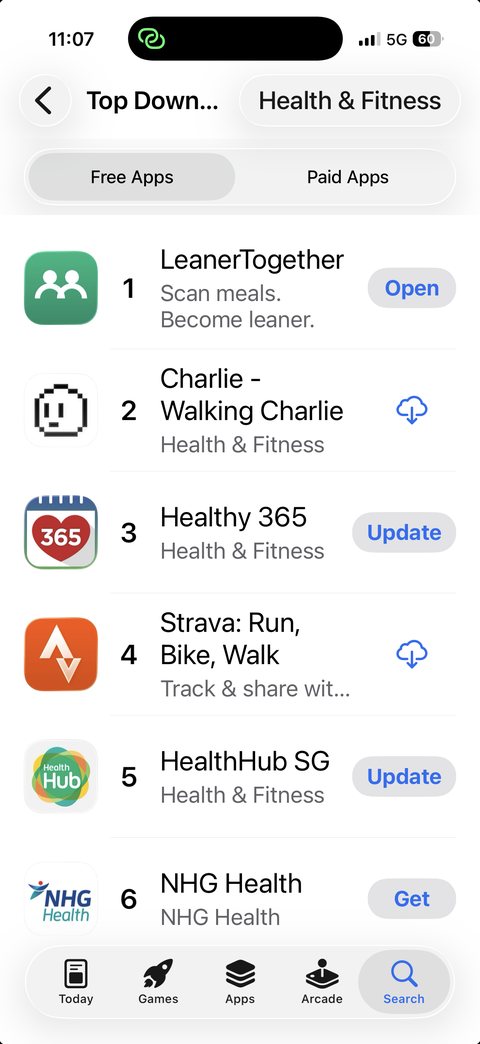
The app I built is on both stores
LeanerTogether. A health app, which is reviewed harder than most. Built by one person who is not a developer.


Be honest about why
Which one of these is yours?
Money
Charge for access, sell a tool, or put the thing you already sell somewhere people can buy it at two in the morning without you.
Time
The spreadsheet, the WhatsApp threads, the form you retype into another form. Do it once properly and stop doing it every week.
Capacity
The part of your work that is the same every time is the part software should be doing, so you can spend your hours on the part only you can do.
Cost
If somebody built it for you, changing a headline is an invoice and a two-week wait. Build it yourself and it is ten minutes on a Tuesday night.
Credibility
A real address you can send someone, and a tool with your name on it, changes what people assume about you before you open your mouth.
Control
Every month you pay for software that does eighty percent of what you need. Own the twenty percent instead, and shape it around how you actually work.
Proof
You will not know from thinking about it. Put a real version in front of ten real people and they will tell you in a week what two years of planning will not.
The honest one
Some people just want to stop being somebody who talks about it. That is a good enough reason and it is the one I hear most.
Three years ago this needed a team, five figures and eight months. Not because the idea was hard, but because somebody had to type all of it.
That part is gone. The machine writes the code now. What it cannot do is decide what to build, look at what came back and say whether it is right.
Which means the bottleneck moved. It used to be whether you could code. Now it is whether you can say clearly what you want.
You have been able to do that for years. Nobody told you it was the only part that was left.
What you can build
This is not a restriction, it is the discovery. Once you see the six shapes you stop being intimidated by software, because you can name what anything is.
Log one thing again and again, and watch it add up.
Like Streaks, Toggl, a weight diary, or a gym log. Yours might be client sessions, daily takings, or medicine taken.
A list of people, a note against each one, and who you have not seen lately.
Every CRM is this. So is a member portal or a staff directory. Yours might be clients, students, or your own parents.
A form anyone can fill in, and a private inbox where you work through them.
Like Zendesk, a job application portal, or a feedback form. Yours might be enquiries you currently lose in WhatsApp.
A set of things people browse, search and save.
This is Shopify, Netflix and property portals. Yours might be a menu, a course list, or your stock.
A few questions in, one answer out, saved so it can be shared.
Like a mortgage estimator or a tax calculator. Yours might be a quote, a renovation estimate, or a fitness target.
You offer times, somebody takes one, you both see it.
Like Calendly, class sign-ups, or hotel reservations. Yours might be consultations, viewings, or studio hire.
Underneath, all six are the same app: a login, one or two tables, a list, a form, and one number that proves it is working. Which is why twelve people with six different ideas can all finish on the same day.
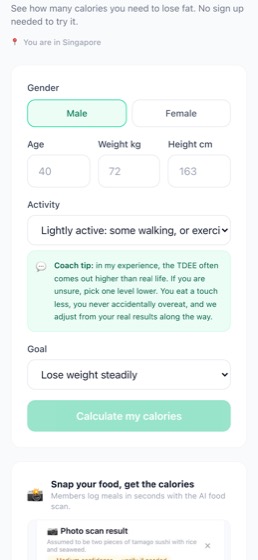
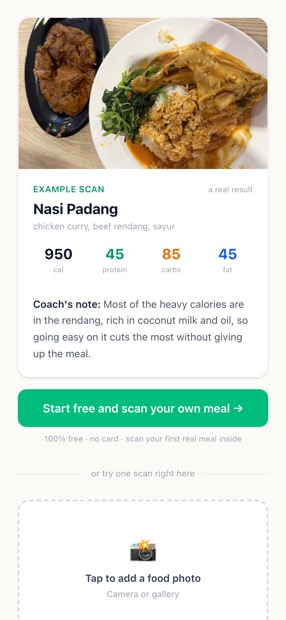
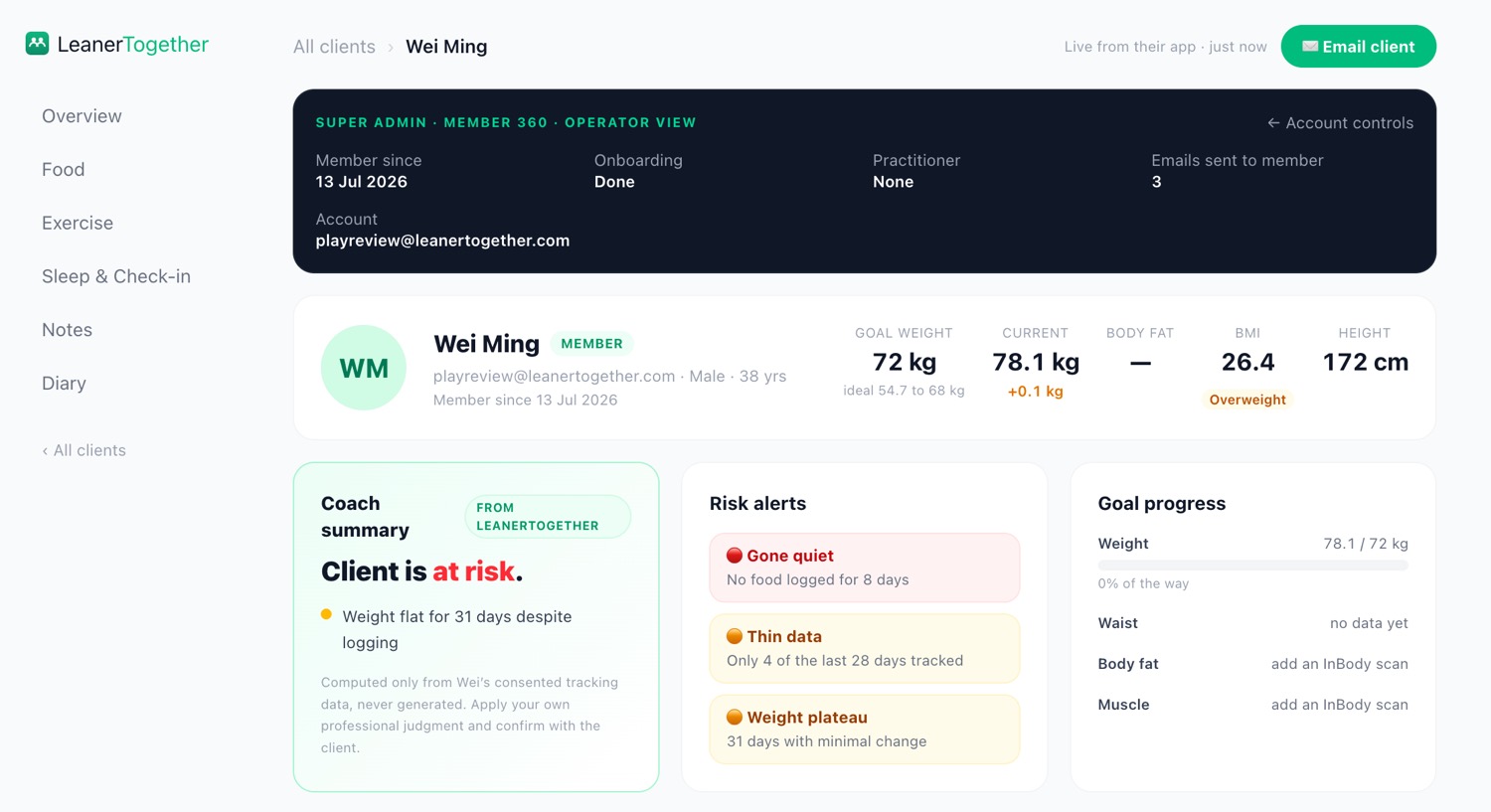
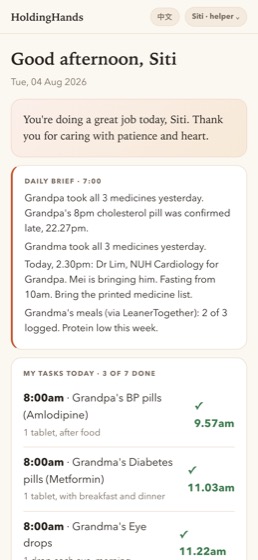
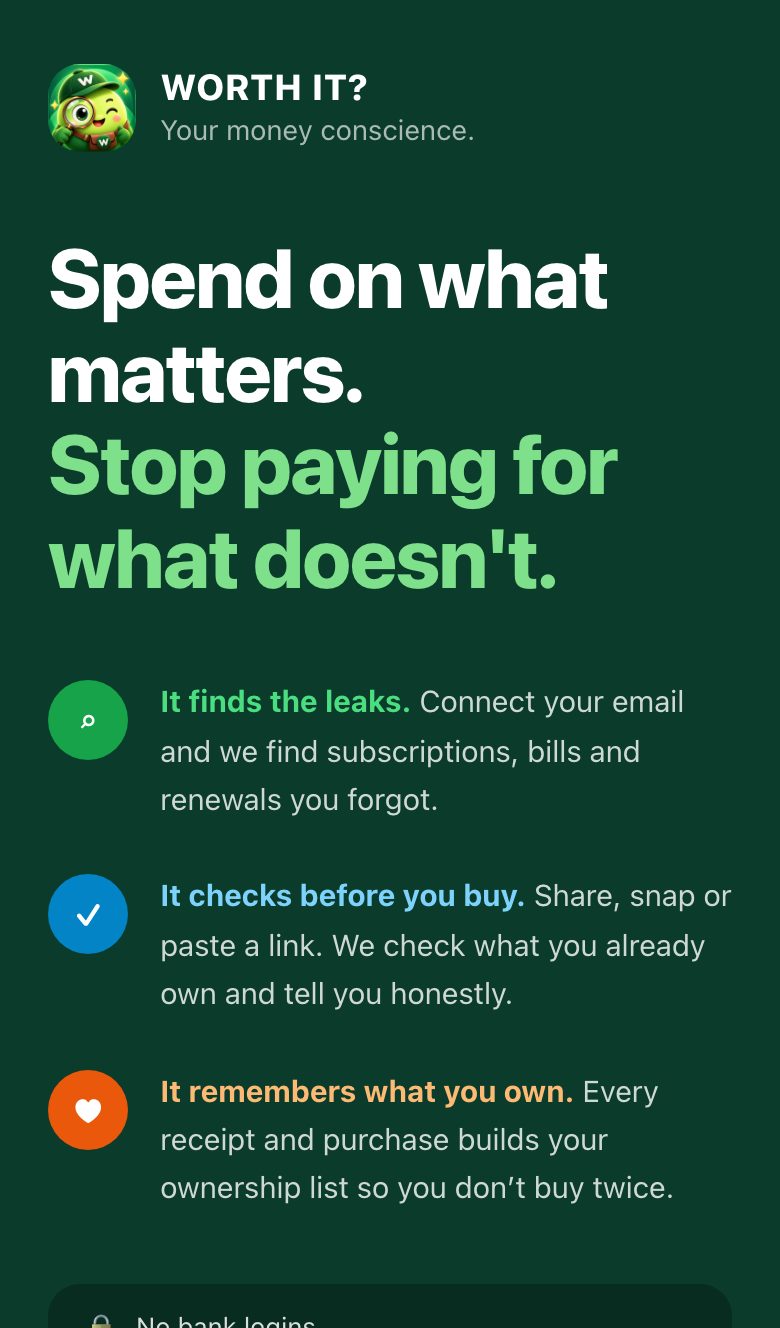
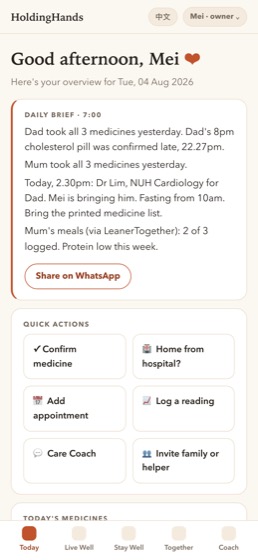
Point a phone at a plate of hawker food and it comes back with the calories, the protein and a note about what to do next. These are real screens from apps that real people are using today, on an actual iPhone and an actual iPad.
Desktop · the practitioner console


It made it all the way through
Not a prototype, not a web page pretending. A real listing you can download right now, on the phone you are holding, with hundreds of people using it and a hospital pilot in progress.
You will not walk out a software engineer. You will walk out someone who can turn an idea into working software, which is a completely different thing, and far more useful to you.
And then a third one
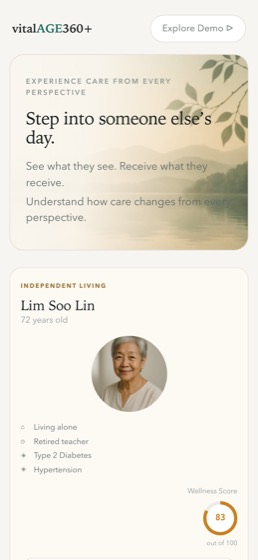
You can talk to it right now. It is a working demo, not a shipped product, and I would rather you poked at it than took my word for any of this.


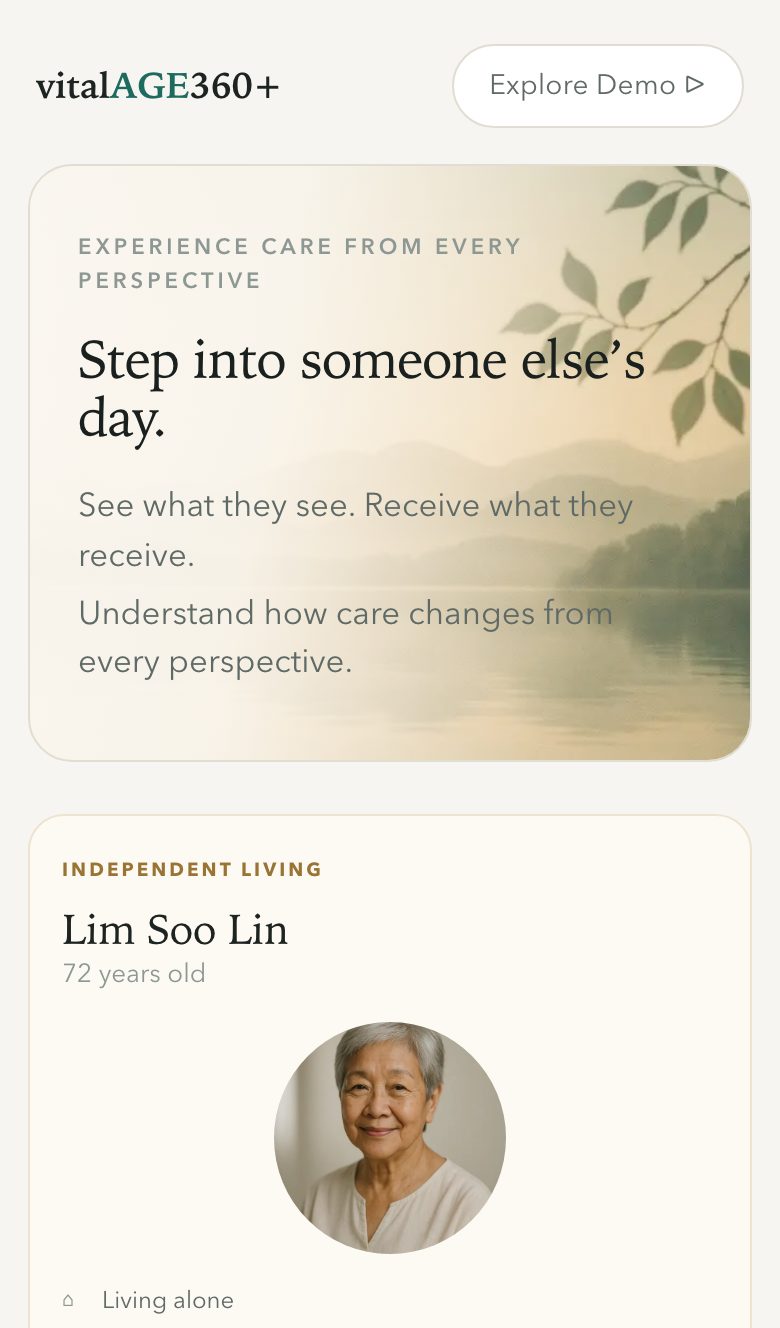
Four people share one case. The person living it, their family, the health coach and the doctor, and each one sees a different slice of the same week.
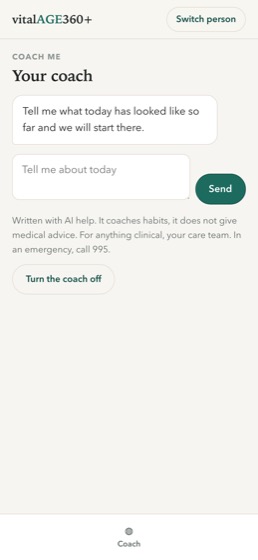
The part worth looking at is what it refuses to do. Try to make it give you medical advice. It declines and sends you to a person, and that line sits on the screen rather than buried in a policy nobody opens.
Nothing the machine writes reaches anyone until a human has read it and said yes. That is not a feature, it is the reason a clinician will use it at all.
It is running below, on this page. No sign-up, nothing to install.
Talk to it. It is right here.
Ask it something it should refuse, and watch where it sends you instead. That is the part worth seeing.
Runs on this page. Nothing to install, nothing to sign up for.
That is not talent getting better.
That is lessons getting written down.
Who is teaching this
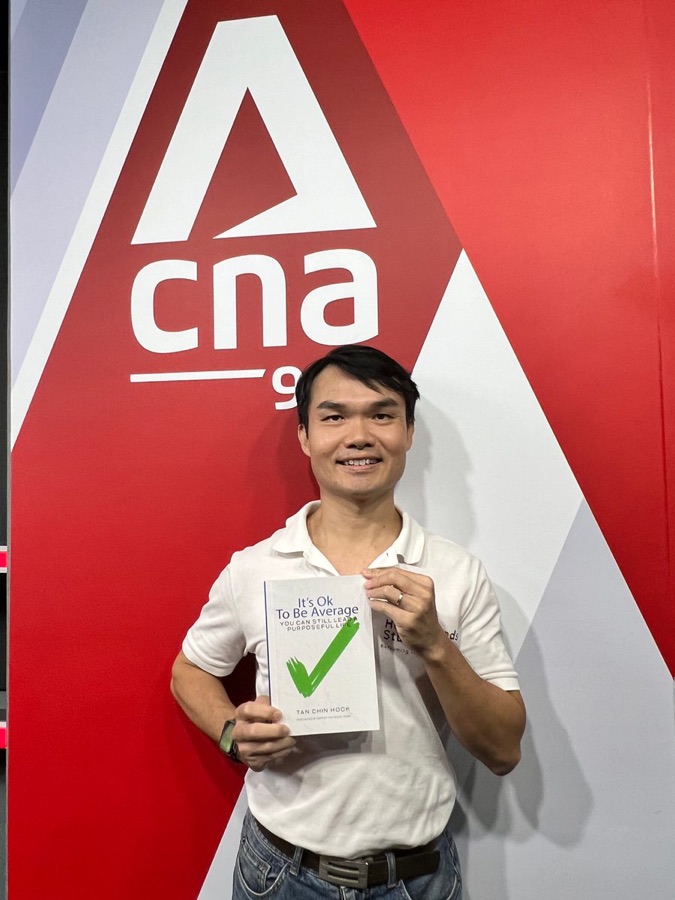
Channel News Asia
Coach Chin Hock has been featured on Channel News Asia, The Straits Times and Zaobao, and is the published author of It's Ok To Be Average: You Can Still Lead a Purposeful Life.
He is a WSQ Qualified Master Trainer and an ICF-accredited coach, twenty-five years in corporate, and he has taught more than a thousand learners across accredited workplace courses and a decade of photography workshops.
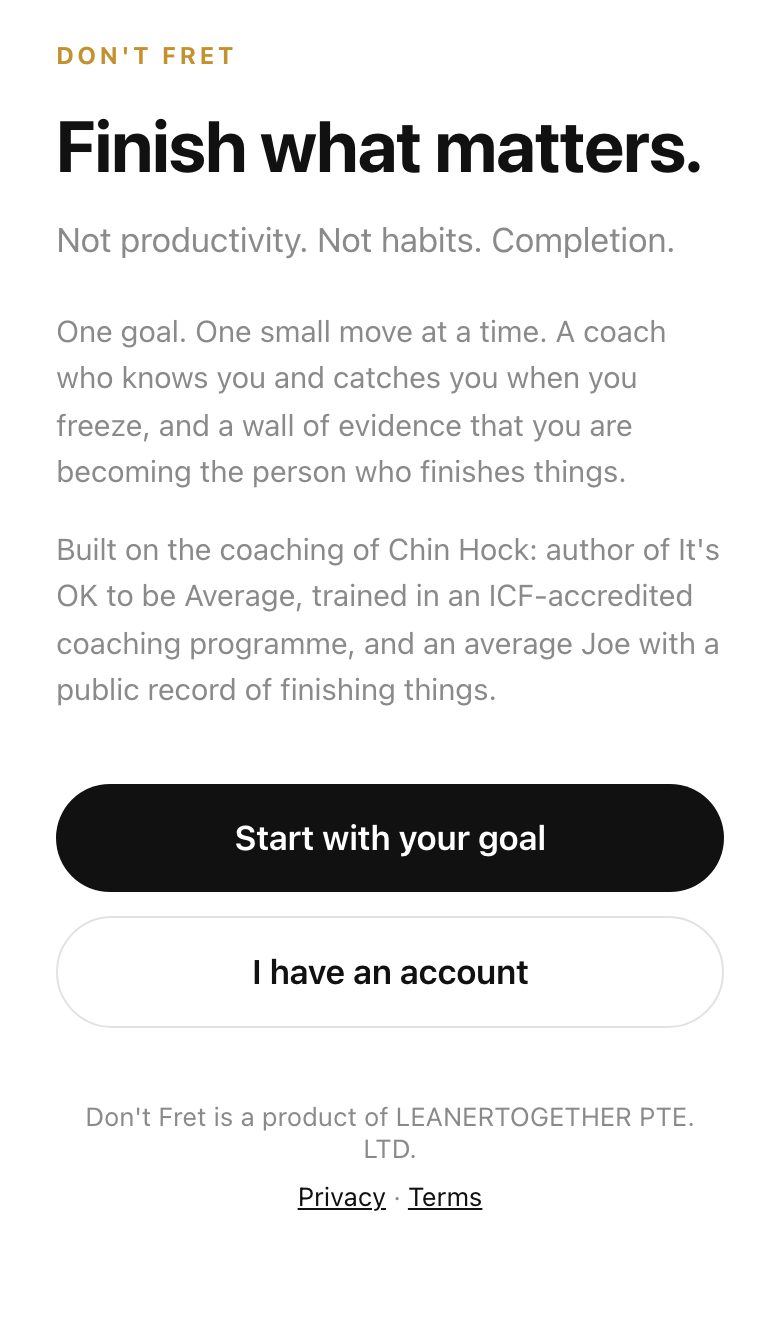
At forty-seven he took himself from 22% to 15% body fat on hawker food, and stood on a competition stage. Then he built the app that does it for other people, and it is on the App Store and Google Play.
And he is not a software engineer. Three years ago he could not have built any of it. That is the entire reason this day exists.
Every mistake I made, handed to you
Nothing about me changed in between. The second one was faster because I could tap on the first, on every dead end I had already walked into. Nine consecutive weeks of evenings, wrong turns, things that broke in front of real people, and nine rounds of App Store review.
On Saturday I hand you all of it, so you skip it.
You get every one of them on the day, worked through while your own app is in front of you, and printed in your workbook to take home. That is what turns nine weeks into one Saturday.
Reserve my seat →Most of these look obvious once somebody tells you. That is exactly the problem. You do not find out about them by reading, you find out at eleven at night when something has broken and you cannot see why. Saturday is where you get told first instead.
Read this before you pay
I would rather lose the seat than have somebody sit there on the wrong Saturday.
Not a limitation. A line.
It can write the code. You still will not have the thing.
You get the steps for all of these. You do not get them by six.
Because a game is not a code problem, and that is the part nobody says out loud.
The machine will happily write you movement, combat, an inventory and a save file in an afternoon. Then you will be sitting in front of a grey rectangle with no characters, no world, no music, no animation and no reason to play it. A game is roughly a tenth code and nine tenths art, sound, balance and playtesting, and none of those nine tenths happen on a Saturday.
There is a second problem, and it is the harder one. You cannot use anybody else's art. Not a sprite, not a soundtrack, not a character somebody else drew. So before you have a game you have an art project, and that is a different craft with a different timeline and usually a different person.
If you genuinely want to make games, go and learn a game engine. It is a good thing to do and this is not the room for it. What this day is for is software that does a job for somebody. Less romantic, far more likely to still exist in a year.
None, and you will not write any code. You type instructions in plain English and read what comes back. The people who struggle are almost never the least technical ones. They are the ones who have not decided what they want, which is why the morning is spent on that.
Claude Code and ChatGPT. The same hosting and database I use for my own live apps. You own every account. Budget roughly S$40 to S$60 a month to keep an app running, and we go through that honestly on the day.
All of it. The code, the accounts, the data, the web address. Nothing is licensed from me and there is nothing to keep paying me for.
Yes, afterwards. You get a written walkthrough of both, including the mistakes that cost me the most time. What I will not do is promise you a store listing by six o'clock, because review queues take about a week and that part is not in my hands.
Either. Bring a personal laptop, not a locked company one, because work machines block the installs and nobody can fix that in the room. We check your machine together on a call three days before.
There is a red card on your table. Put it up after ten minutes stuck and I come to you. No hand raising, no waiting, no suffering quietly. The person who burns fifty minutes alone is the person who does not finish.
Come to the setup call and we will find one. Most people arrive with something they have carried for years and never said out loud.
Honest answer, I do not know. What I do know is it already replaced the developer I could not afford, and that is what this day is about.
First cohort price. The next one is S$3,000.
Saturday 29 August 2026, 9am to 6pm, in Singapore.
Secure checkout by Stripe. PayNow or card. Your details never touch this page.
Terms, refunds and the guarantee · full refund up to 15 August.
Twelve seats only·small enough that I reach every laptop
If it is six o'clock and your app is not live, I stay until it is, or you get every dollar back. Two conditions. You turn up with the laptop and accounts we set up together on the call. And we agree on the call which of the six shapes above yours is, because I can only promise you will finish if we both know what finished means before we start. That is not a small box. Shopify is a catalogue. Calendly is a booking page. Every CRM is a roster.
Twelve seats. S$300, first cohort. Saturday 29 August 2026